
Whether you're looking to tackle a certain issue, gain new skills, or build capacity to do work in your community, this collection of guides and instructions covers a wide range of topics from different organizations, all with the aim of making positive changes in communities.
Produced by youarethecity, an urban design practice run by Kaja Kühl in NYC, the guide is aimed at individuals and community groups wanting to remediate toxic soil on vacant lots in their neighborhood.
Written by artists/ activists Gavin Grindon and John Jordan of the Laboratory of Insurrectionary Imagination, this 68 page guide inspires readers with belief in the impossible. The poetic call to action was initially distributed at the 2010 art activism event organized to protest proposed cuts to arts funding in London. Since its initial distribution the Open Access text has been translated in more than 6 languages and downloaded worldwide.
As one of the Center for Active Design’s more recent publications, Active Design: Guide for Community Groups addresses transportation, recreation, buildings, green space and nature and healthy foods and beverages. Inspired by NYHD’s work with community partners throughout the 5 boroughs, the Guide for Community Groups provides resources for communities to identify assets, envision the future of their neighborhood and strategize to improve public space. With these tools community led initiatives will be better empowered to make their neighborhoods more livable, vibrant and healthy.
A collection of projects, organizations, and ideas to get you inspired and moving!
The Ghana Think Tank's most recent project, American Riad, is a 3 year project that will transform formerly abandoned homes in Detroit’s North End into 8 homes with a shared courtyard. The project concept came from a Moroccan Think Tank working to develop solutions to what they described as the United States’s “problem of social isolation”. Ghana Think Tank co-founder, John Ewing, recalled the feedback from the Moroccan group “They said to us you need to stop this obsession with the single family homes...instead you need housing more like ours: That's communal housing around a common courtyard with a single entrance, then you will have community.“
ne of New York City’s largest volunteer projects has been working for over a decade to make the city brighter one daffodil bulb at a time. Since 2001 New Yorkers for Parks (NY4P) has been planting daffodils every fall and watching them grow in the spring. As of 2017 the project has distributed more than a half a million bulbs citywide and partnered with the NYC Housing Authority and city schools to engage more than 100,000 students and volunteers.
The global initiative of Jane's Walk is inspired by activist and urban studies scholar, Jane Jacobs. In her practice Jacobs emphasized that cities should be shaped by the residents that occupy them and Jane’s Walks provide opportunities for people to tell the stories of the spaces where they live, work and play while also building new relationships within their communities.
Trained as an Urban Planner, designer and visual artist Candy Chang has been making art in the public sphere since 2006. In 2009 she collaborated with the Center for Urban Pedagogy and the Street Vendor Project to make a poster pamphlet that explained the complex regulatory system for street vendors in New York City. The project includes a history of street vending in New York, interviews with street vendors and policy reform recommendations.
bulidingcommunityWORKSHOP, the community design center that maintains this site, has produced a large body of research and documentation of its neighborhood based work. This collection contains all publications [bc] has put out over the last seven years in the 3 regions it works in - Dallas, Houston, and the Rio Grande Valley. In addition to being informative about the regions [bc] works in, these publications also provide further inspiration for community based work that can be undertaken anywhere in the world.
We have developed a series of accessory dwelling units (ADUs) that utilize the RAPIDO CORE as a base building and explore different outdoor design layouts that allow for adaptation and flexibility of placement in multiple lot configurations.
[bc] has worked with the Texas Organizing Project (TOP) to create resources for individuals to learn about specific issues including flooding, the disaster recovery process, housing and gentrification. We hope that these "Modules" will help people provide informed feedback at community meetings, support community organizing efforts, and empower them to have engaged conversations with local officials and experts.
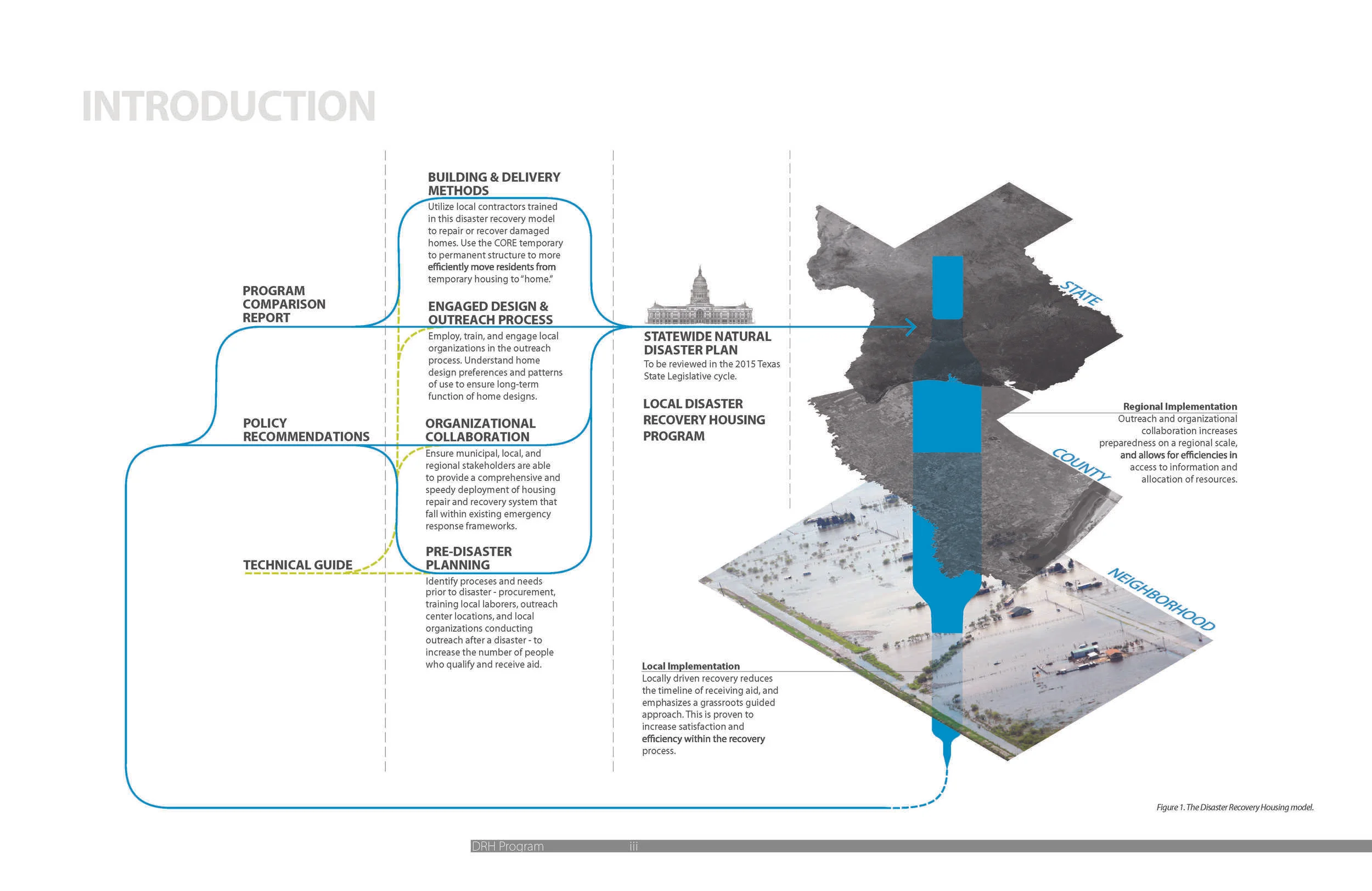
In 2008, Hurricane Dolly made landfall in Texas’ Lower Rio Grande Valley causing widespread flooding and sustained winds of over 120mph. The Texas Natural Disaster Housing Reconstruction Committee assembled a plan to design a statewide rapidly deployable replacement housing system for victims of federally declared natural disasters. RAPIDO is [bc]'s response to the state’s initiative, addressing issues of social equity, rapid deployment, and constructability.
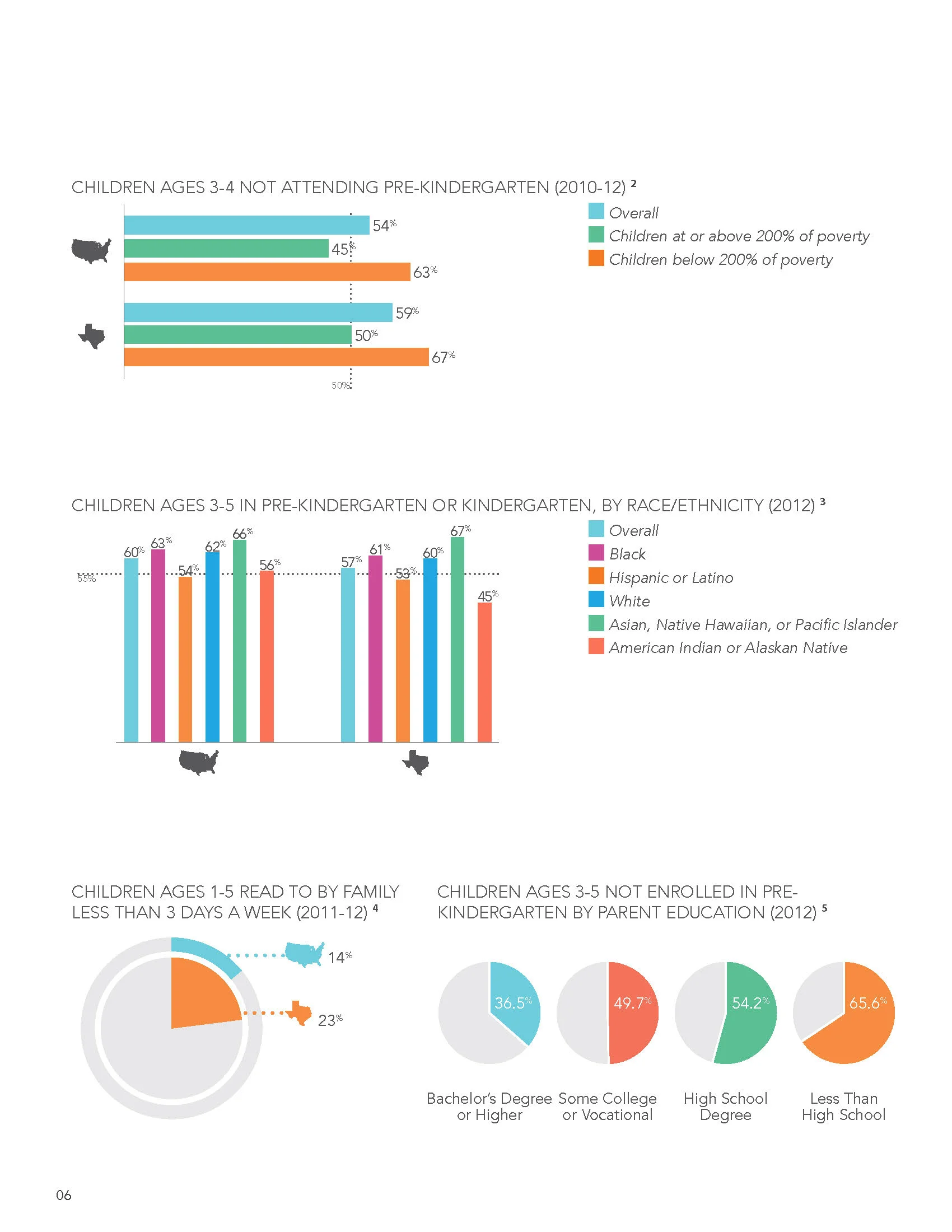
A Data Driven Decision-Making (D3) report completed by [bc] for AVANCE-Dallas. To help AVANCE-Dallas expand their early childhood operation, [bc] provided a set of recommendations to guide future growth in areas of need. This report draws from a number of national, state, and local data to identify and contextualize issues affecting AVANCE-Dallas’ strategic decision-making.

The Vacant Property Toolbox responds to both the challenges and possibilities that vacant properties pose while also giving concrete strategies to help property owners avoide foreclosure.